
Hot Yoga Foot Protection for Beginners: A Complete Guide

Last Updated: November 26, 2026
Quick Summary
Hot yoga foot protection for beginners means choosing what sits between your feet and the heated studio floor so you can grip, balance, and stay comfortable through class. Bare feet are the standard in most studios, and grip socks are a smart option when sweat, hygiene, or cold feet become a problem.
- Grip socks are a tool for specific situations, not a requirement in hot yoga.
- A grip sock's heel pocket should sit exactly on your heel bone, not halfway up your Achilles.
- Bare feet work best when your soles stay dry enough to grip and the studio allows it.
- A yoga towel absorbs sweat before it pools under your feet, keeping mat grip consistent.
- A five-minute foot prep routine before class keeps socks in place and protects your skin.
Table of Contents
- What Is Hot Yoga Foot Protection for Beginners?
- Do You Need Grip Socks for Hot Yoga?
- How to Choose Hot Yoga Grip Socks That Stay in Place
- Barefoot Hot Yoga: When Going Without Socks Works Best
- Why a Yoga Towel for Hot Yoga Changes Your Grip
- Yoga Socks for Beginners: A Step-by-Step Foot Prep Plan
- Preventing Blisters, Calluses, and Skin Irritation in Class
- Pick Your First Pair of Yoga Socks Before Your Next Class
- Frequently Asked Questions
What Is Hot Yoga Foot Protection for Beginners?
Hot yoga foot protection for beginners is the practice of choosing what goes between your feet and a heated studio floor so you can grip, balance, and stay comfortable through a full class.
Here is the core tension most new students run into. A heated studio raises the room temperature and your body temperature at the same time. Sweat builds on the soles of your feet faster than it does in a standard class. That moisture is exactly what turns a yoga mat into a slip hazard.
Below, we break down whether you need grip socks, how to pick a pair that stays put, how a towel changes your grip, and a simple foot prep plan you can run before your next class.
Do You Need Grip Socks for Hot Yoga?
No, you do not need grip socks for hot yoga. Bare feet are the standard in most studios, and many teachers expect students to practice barefoot so the toes can spread and the sole can connect with the mat. Grip socks are a tool for specific situations, not a requirement.
That said, a growing number of students wear them for good reasons. Sweaty soles lose traction, and a sock with silicone grips on the bottom restores that hold. Some students prefer a barrier between their skin and a shared studio floor for hygiene.
So the honest answer is: barefoot is the default, and grip socks are a smart option when sweat, hygiene, or cold feet become a problem. For movement beyond the mat, grip socks for sports raise a related question about how friction and fit affect blister risk.
| Option | Grip Level in Heat | Hygiene Barrier | Best For |
|---|---|---|---|
| Bare feet | High when dry, drops with sweat | None | Most standard classes |
| Regular socks | Low, slides easily | Yes | Warm-up and savasana only |
| Grip socks | High, silicone holds the mat | Yes | Sweaty feet, shared floors |
| Toe-less grip socks | High, toes stay free | Partial | Toe splay plus grip |
How to Choose Hot Yoga Grip Socks That Stay in Place
Fit comes first. A grip sock that bunches under the arch or rolls at the heel will fail you mid-pose, no matter how good the silicone pattern looks.
Use this selection checklist before you buy:
- Heel pocket: The heel cup should sit exactly on your heel bone, not halfway up your Achilles. If the heel seam rides high, the sock will slide forward in downward dog.
- Arch band: A knit rib or light elastic band at the midfoot holds the sock flat against your sole. A sock with no arch structure stretches out once sweat sets in.
- Toe fit: Toes should reach the end of the sock without curling. Extra length at the toe creates a fold that rubs during lunges.
- Sole pattern: Look for silicone dots or treads across both the ball of the foot and the heel. Grips only on the toes do nothing in a wide-legged stance.
- Fabric: A light acrylic-nylon blend with mesh vents breathes better than heavy cotton, which holds sweat and gets heavy. Cotton also loses shape faster after repeated washing.
- Cuff: A low, snug cuff stays put without digging into the ankle during balance poses.
A quick fit test at home: put the socks on, stand on one foot, and hold tree pose for 30 seconds. Then do three downward dogs and a low lunge on each side. If the heel pocket stays on your heel and the arch band stays flat, the fit is right.
Design choices matter for different feet:
- Open-toe design: lets toes spread and breathe, which helps balance and reduces heat buildup between the toes.
- Open-heel design: keeps the heel free to plant directly on the mat, which some students prefer for grounding.
- Full-coverage grip sock: best for shared floors or when you want a full hygiene barrier.
- Compression: light compression supports the arch without pinching; skip it if you have circulation concerns unless a clinician approves.
Watch out: a sock that feels snug in the store can stretch and slip once sweat sets in, so always run the home fit test before trusting a new pair in class. For a closer look at how different grip designs perform in a heated room, our guide to yoga grippy socks reviews traction and comfort side by side.
Barefoot Hot Yoga: When Going Without Socks Works Best
Bare feet work best in a heated class when your soles stay dry enough to grip and the studio allows it. Many teachers prefer bare feet because the toes can splay naturally, which improves balance and foot stability. Skin-to-mat contact also lets you feel the floor and adjust your stance in real time.
Barefoot practice has real advantages. Your toes engage fully, your arch moves freely, and you build stronger foot muscles over time. The trade-off is sweat. Once your soles are slick, traction drops and you may slide in lunges or balancing poses.
If you go barefoot, keep a towel at the top of your mat to wipe your feet between sequences. Our comparison of open-toe grip versus barefoot helps you decide whether you can skip socks and still get the traction you need.
Why a Yoga Towel for Hot Yoga Changes Your Grip
A yoga towel for hot yoga absorbs sweat before it pools under your feet, which keeps your mat grip consistent from the first pose to the last. That is the whole point: the towel manages moisture so your feet and hands have a dry surface to press into.
Place a grippy towel over your mat, smooth it flat, and dampen the corners if it slides. The towel does the absorbing, and your feet do the gripping. For students who sweat heavily, a towel is often the single biggest upgrade to their setup.
Towels and socks solve different problems, though. A towel handles sweat on the mat; a sock handles sweat on the foot and adds a hygiene layer. Many students use both. For a practical breakdown of which mat-and-towel setup actually works in heat, see our guide to a hot yoga mat and towel.
Yoga Socks for Beginners: A Step-by-Step Foot Prep Plan
Yoga socks for beginners work best when you prep your feet before you pull them on. A few minutes of care keeps the sock in place and protects your skin.
Follow this routine before class:
- Wash and dry your feet fully. Dry skin holds a sock better than damp skin.
- Trim your toenails. Long nails catch on knit fabric and cause runs.
- Moisturize dry spots, then let it absorb. Give cream a few minutes to sink in before socks go on.
- Roll a towel under your arch. A few seconds of pressure warms the foot and eases stiffness.
- Slide the sock on and smooth it flat. Check the heel and ball for bunching.
- Test your grip. Try a downward dog and a lunge at home before class.
This routine takes about five minutes and pays off in every session.
Preventing Blisters, Calluses, and Skin Irritation in Class
Friction causes most foot problems in a heated class, but the mechanism is specific: heat softens the skin, sweat adds moisture, and repeated rubbing against a sock seam or mat surface separates the skin layers. That combination, warm, damp skin plus shear force, is what produces blisters and irritation.
A few habits keep your skin comfortable:
- Wear a sock that fits without bunching. A seam that rubs the same spot every class will eventually blister, no matter how small the seam.
- Dry your feet between sequences. Keep a small towel at the top of your mat and wipe the soles and between the toes when you feel moisture building.
- Wash grip socks after every class. Sweat and bacteria trapped in fabric increase irritation and odor; machine wash and air dry to protect the silicone grips.
- Moisturize dry heels and calluses at night, then cover them. A thin layer of cream under a sock while you sleep helps soften rough patches without making your feet slippery in class.
- Trim toenails and file rough edges. Long or jagged nails catch knit fabric and can cause runs or small cuts.
If a hot spot develops during class, stop and dry the area before it becomes a blister. A small piece of blister tape or a thin protective patch over the hot spot can get you through the rest of the session.
Calluses are a common concern for regular students. If rough patches build up, our article on whether calluses on feet can be treated at home walks through safe options. Watch out: never pick at or cut a callus yourself, since that can open the skin to infection.
Pick Your First Pair of Yoga Socks Before Your Next Class
Choosing your first pair is simpler than it looks. Match the sock to your biggest concern: sweat, grip, warmth, or hygiene. Then check the fit and the grip pattern, and you are ready.
Original Pedi-Sox® invented the pedicure sock, and its Barefoot Sox™ line is designed for movement activities such as yoga, dance, and Pilates.
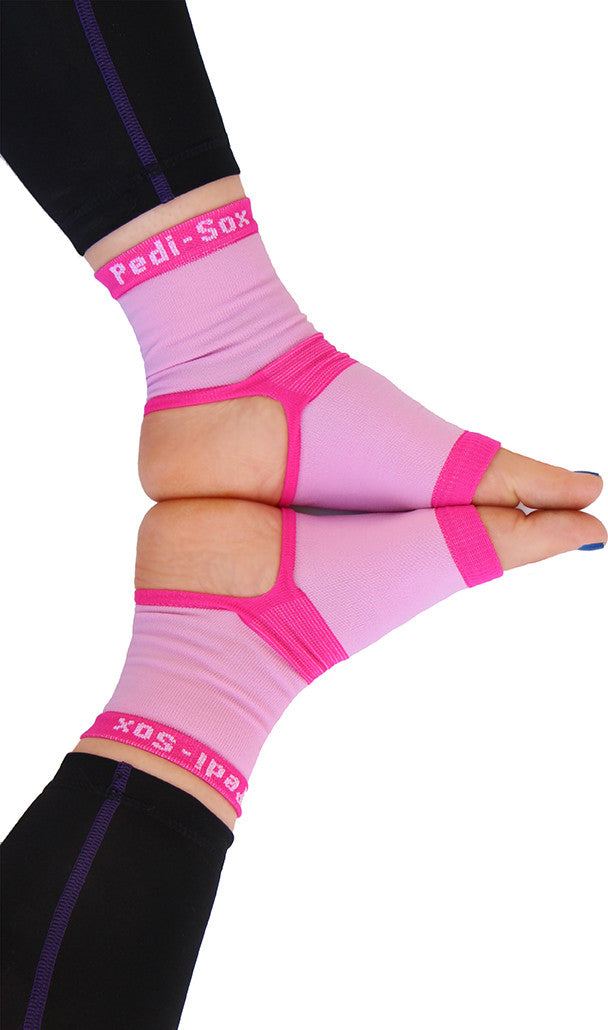
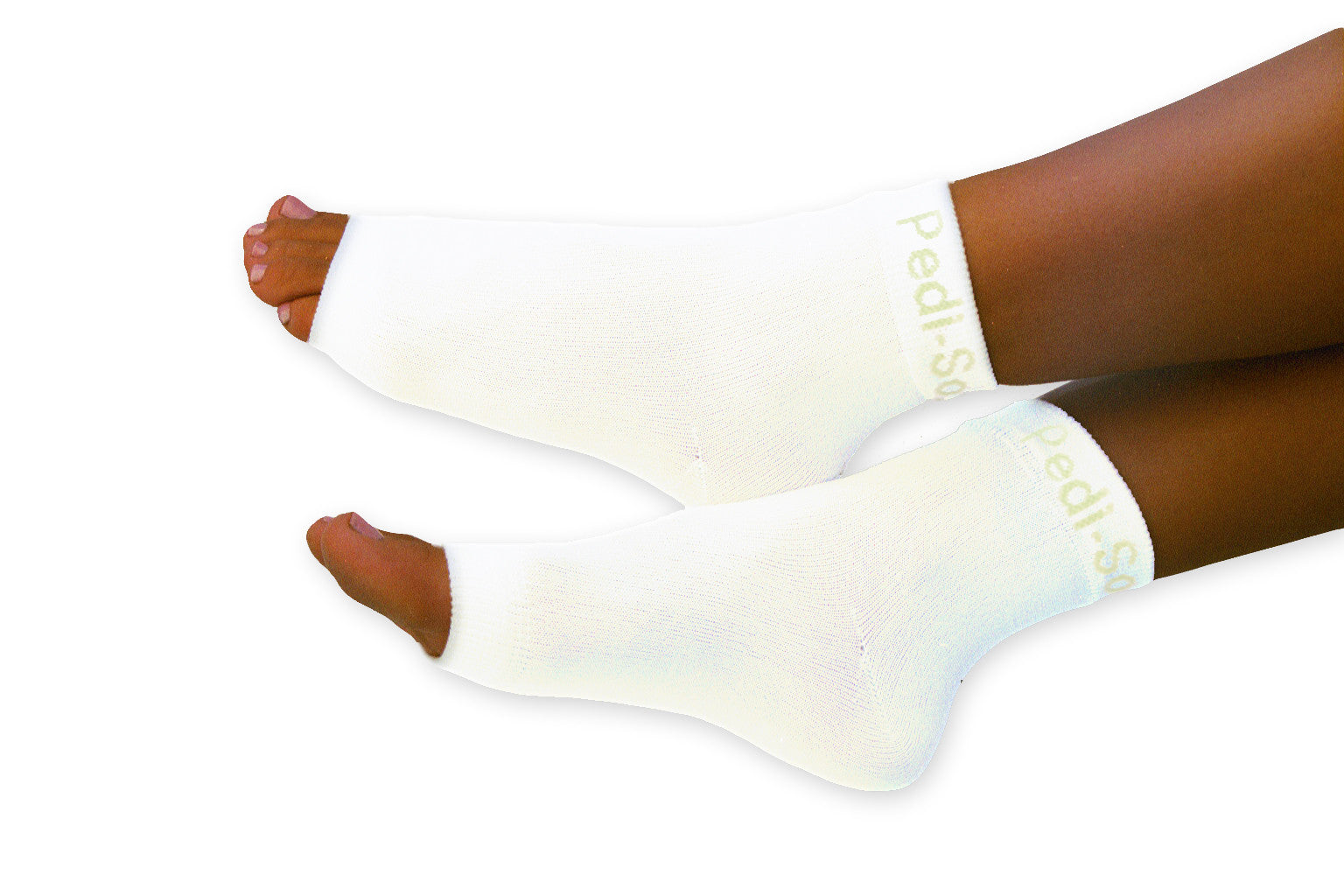
Our Barefoot Sox™ in Midnight is a solid first pair at $9.00. It is designed to encourage a secure foothold on any surface and works for yoga, Pilates, barre, and dance. Pick your pair, prep your feet, and step onto the mat with confidence.
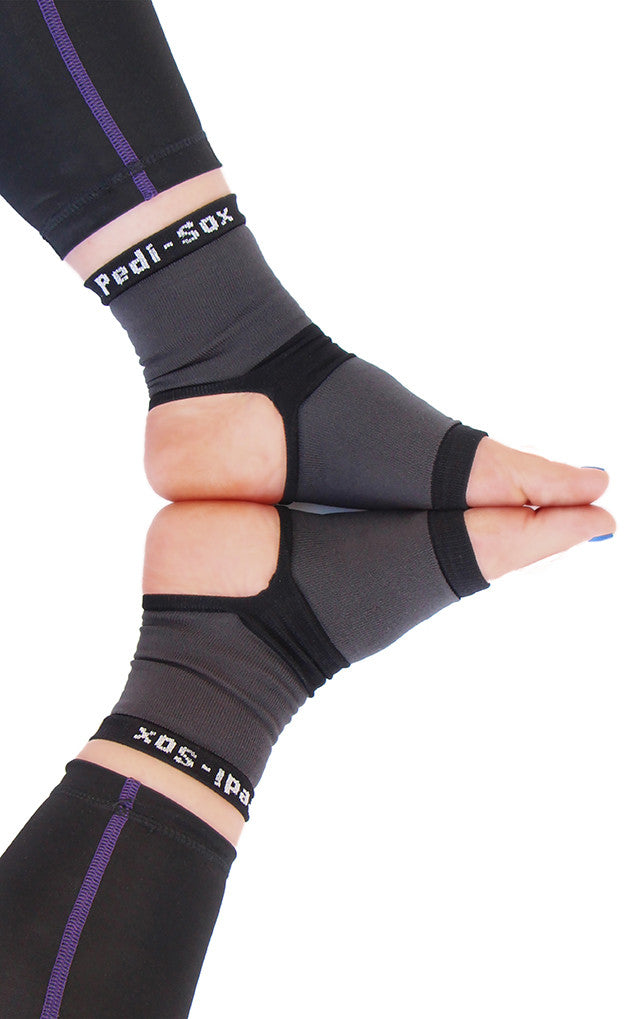
Your first heated class does not have to be a slip-and-slide. With the right foot prep and a pair of grip socks that stay put, you can focus on your breath instead of your balance.
Frequently Asked Questions
Do you need grip socks for hot yoga?
No, grip socks are not required in most hot yoga classes, and many studios still practice barefoot. They help when sweat makes your mat slick, when you want a barrier between your feet and shared studio floors, or when a foot condition makes bare skin uncomfortable.
Are grip socks safe to wear in a hot yoga class?
Grip socks are safe for most people, but fit matters more than the label. Choose a pair with silicone grips on the sole and a ribbed cuff that stays at the ball of your foot, so the sock does not roll or bunch under your arch mid-pose. If you have diabetes, neuropathy, or a history of foot ulcers, check with your doctor before adding any footwear to a heated class, since heat and reduced sensation raise the risk of skin damage.
Should beginners practice barefoot hot yoga or wear socks?
Start barefoot for your first two or three classes so you can feel how your feet grip the mat and learn where you slip. If sweat makes downward dog or warrior poses unstable, switch to toe-less grip socks for those sessions. Many beginners keep both options in their bag: bare feet for slower floor work and grip socks for standing sequences where traction matters most. Either choice is fine as long as your studio allows it.
How do you prevent slipping during hot yoga as a beginner?
Place a yoga towel for hot yoga over your mat where your hands and feet land, since the towel absorbs sweat and adds texture. Wipe your feet and mat dry between standing sequences, and keep your weight through the ball of your foot rather than the heel in poses like warrior two. If slipping continues, add a pair of grip socks with silicone soles. Arrive ten minutes early to set up near the cooler side of the room while you adjust.

- Editorial Team


Comments 0