
Hot Yoga Mat and Towel: What Actually Works

Last Updated: November 24, 2026
Quick Summary
A hot yoga mat and towel setup needs a closed-cell mat that stays put on a heated floor, a towel that covers the mat and grips when wet, and foot protection that stops your soles sliding inside the towel. Buy the mat first, then a textured microfiber towel sized to its exact dimensions.
- Measure your mat before buying a towel, since a size mismatch is the most common cause of bunching.
- Choose a towel with a textured face and silicone nubs for grip before and after you sweat.
- Wash microfiber towels in warm water and skip fabric softener and dryer sheets entirely.
- Hang towel and mat to dry fully before rolling, and deep-clean the mat monthly.
- Barefoot Sox open-toe grip socks cost $9.00 a pair and hold at the ball of the foot.
Table of Contents
- What do you need for hot yoga mat and towel setup?
- Mat, towel, or both: choosing your hot yoga mat and towel set
- Yoga mat towel with grip: what to look for
- Best yoga towels for hot yoga: absorbency and quick-dry materials
- Sizing and fit: matching towel dimensions to your mat
- Hot yoga mat towel care: washing, hygiene and odor prevention
- Choosing foot protection that stays put during heated practice
- Building your hot yoga setup
- Frequently Asked Questions
What do you need for hot yoga mat and towel setup?
A hot yoga mat and towel setup needs three things: a mat that stays put on a heated floor, a towel that covers the mat and grips when wet, and foot protection that keeps your soles from sliding inside the towel. This guide covers how to combine them so nothing bunches, slips, or soaks through mid-class.
Here is the part most shopping guides skip. A towel alone will not save a slippery mat, and a great mat will not help if your towel rucks up under your hands in the first standing series. The pieces have to work as a system.
Below, we break down the setup piece by piece, from towel materials to sizing to washing, so you can buy once and practice without adjusting your gear between poses.
Mat, towel, or both: choosing your hot yoga mat and towel set
You have three real options, and the right one depends on how much you sweat and how often you practice.
Option 1: Mat plus towel. The standard setup. A closed-cell mat provides the base, and a towel laid over it absorbs sweat and adds grip.
Option 2: Towel only. Some practitioners lay a full-length towel directly on the studio floor.
Option 3: Integrated mat-towel. A mat with a built-in towel surface bonds the two layers permanently. Nothing shifts, but you cannot swap the towel layer independently when it wears out.
| Setup | Best for | Main trade-off |
|---|---|---|
| Mat plus towel | Most heated practice | Two items to carry and wash |
| Towel only | Travel and minimal packing | Thin cushion, can slide |
| Integrated mat-towel | Practitioners who hate bunching | Whole unit replaced when worn |
For most people, mat plus towel gives the best balance of grip, cushion, and easy cleaning. A hot yoga mat and towel set bought together usually fits better than pieces bought separately.
Yoga mat towel with grip: what to look for
The best yoga mat towel with grip stays put before you sweat and grips harder once you do. That is the whole job, and most towels only do half of it.
Look for two grip systems working together. On top, a microfiber surface with a brushed texture creates friction against your hands and feet. On the bottom, silicone nubs or an anti-slip backing anchor the towel to the mat so it does not slide during transitions.
Moisture-activated grip is the term to know. Some towel surfaces feel slick when dry and only become tacky once dampened.
What most guides miss is the corner question. Towels with corner pockets or weighted corners stay aligned with the mat far better than flat towels, especially in standing sequences.
Watch out: a towel that is too small will slide out from under your hands in downward dog, and no amount of grip spray fixes a size problem.
Best yoga towels for hot yoga: absorbency and quick-dry materials
The best yoga towels for hot yoga balance four traits: absorbency, drying speed, wet grip, and durability. Most guides stop at "microfiber is best." The useful question is which construction fits your sweat rate, your wash schedule, and how long you want the towel to last.
Cotton. Plush, breathable, and pleasant against sensitive skin, but cotton holds moisture instead of releasing it.
Microfiber-cotton blends. A middle path: the cotton softens the hand feel while the synthetic portion improves wicking and drying time. Blends vary widely, so check the fiber ratio.
Bamboo and bamboo-cotton. Often marketed as sustainable because bamboo grows quickly, but most bamboo fabric is viscose, a chemically processed fiber (‘Bamboo’ Fabrics).
Waffle and terry textures. Texture matters as much as fiber.
A quick comparison of how the common constructions behave:
| Construction | Absorbency | Dry time | Wet grip | Durability | Notes |
|---|---|---|---|---|---|
| Microfiber | High | Fast | High when textured | Good with proper washing | Avoid softener; attracts lint |
| Cotton | High but holds moisture | Slow | Moderate | Good | Heavy when wet; best for unheated practice |
| Microfiber-cotton blend | Moderate to high | Moderate | Moderate to high | Good | Check fiber ratio |
| Bamboo viscose | High | Moderate to slow | Moderate | Fair; can pill | Verify sustainability claims |
| Waffle/terry face | High | Moderate | High | Good | Texture improves dry grip |
Quick-dry performance is not just laundry convenience. Letting a towel dry fully also makes it easier to notice whether its size and coverage suit your practice, just as choosing plus size workout gear that stays comfortable through heat can make each class feel more manageable.
Watch out: a towel labeled "quick dry" but sold with a smooth, untextured face may dry fast and still slip under your hands until it is soaked.
Sizing and fit: matching towel dimensions to your mat
Standard mats run about 68 inches long and 24 inches wide.
Work through these fit checks before you commit:
- Length: the towel should reach from the top edge of your mat to the bottom edge, with no more than an inch of overhang at either end. More overhang than that bunches under your hands in forward folds.
- Width: a towel narrower than the mat leaves exposed slick edges where your hands land in wide poses like warrior II. A towel wider than the mat drapes over the sides and can slide when you shift weight.
- Corner anchoring: pockets or weighted corners should line up with your mat's corners. If they do not, the towel will migrate. Measure corner to corner, not just length and width.
- Thickness: a thick towel raises your hands and feet off the mat surface, which changes your sense of the floor in balance poses. Thin microfiber keeps you closer to the mat.
Mat compatibility matters too. Textured or open-cell mats grip towels better than smooth closed-cell surfaces.
A sizing example: a 68-by-24-inch mat pairs with a standard 68-to-70-inch towel that is 24 inches wide, with corner pockets that align.
Watch out: a towel that is too small will slide out from under your hands in downward dog, and no amount of grip spray fixes a size problem.
Hot yoga mat towel care: washing, hygiene and odor prevention
Hot yoga mat towel care comes down to three habits: wash after every heavy session, dry completely before storage, and skip fabric softener. Do those and your towel will stay grippy and fresh for years.
Wash microfiber towels in warm water on a regular cycle with a small amount of mild detergent. Skip fabric softener and dryer sheets entirely, because both coat the fibers and reduce absorbency and grip over time. Tumble dry low or hang to dry.
For the mat, wipe down after each class with a diluted gentle cleaner and let it air dry fully before rolling. Never store a damp mat or towel in a bag; that is how mildew starts.
A practical hygiene routine:
- Wash the towel after every heated session
- Hang both towel and mat to dry before rolling or folding
- Deep-clean the mat monthly with a gentle mat wash
- Replace towels that stay slick even after washing, since grip degrades with fiber wear
- Keep a separate small hand towel for face and hands
Choosing foot protection that stays put during heated practice
Bare feet slide inside a wet towel, and regular socks slide on the mat. That is the gap toe-less grip socks fill. Barefoot Sox™ offers an open-toe, open-heel design that holds the ball of the foot while letting toes spread and breathe.
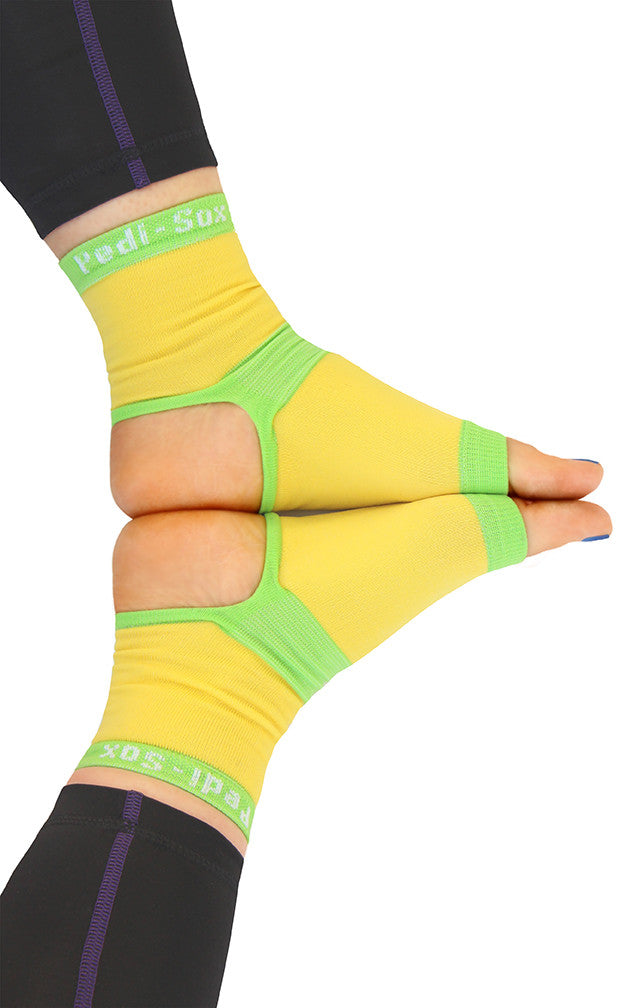
The rib knit cuffs top and bottom hold the sock in place at the ball of foot, so it will not roll up during transitions between heel and forefoot. The acrylic-nylon blend is a lite-weight, year-round grade that stays stretchy and comfortable. At $9.00 a pair, they are an easy addition to a hot yoga mat and towel setup.
If you are weighing whether open-toe grip socks deliver real traction in a heated room, read do open toe socks for yoga give you real grip. For fabric details that affect breathability, see our toe-less socks material comparison. You can match your choice to your studio floor with best yoga socks for studio floor types compared, and go deeper on traction with yoga grippy socks: traction and comfort reviewed. When you are ready to buy, browse the Barefoot Sox™ yoga and dance socks in Happiness, Energy, and Midnight colorways.
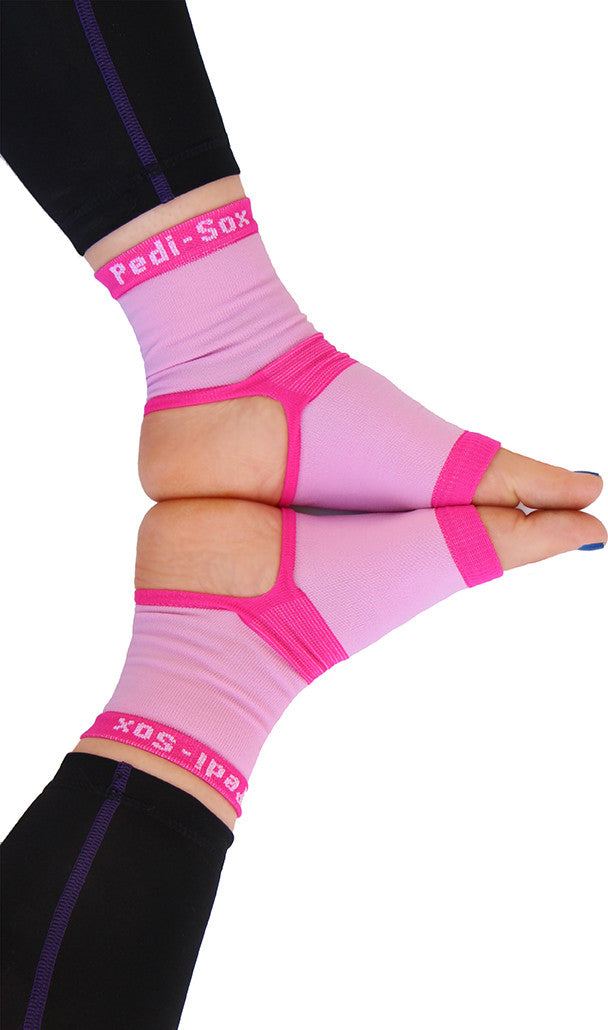
Best for: practitioners who slip inside a wet towel or want warmth without losing toe contact. Skip if: you prefer a completely bare-footed practice.
Building your hot yoga setup
Build your setup in this order: mat first, then towel sized to that mat, then foot protection, then a care routine. Get the sequence right and every piece supports the next.
Start with a mat that grips a heated floor. Add a microfiber towel with a textured face and silicone nubs, sized to your mat's exact dimensions. Add toe-less socks if your feet slide inside the towel. Then commit to washing and drying after every session.
The mistake we see most often is buying a beautiful towel before measuring the mat. Measure first, buy second.
Your setup only works if every layer stays where you put it.
Frequently Asked Questions
Do you need a towel for your mat for hot yoga?
Most people do. In a heated room you sweat enough that bare hands and feet lose traction on a standard mat, and a towel layer absorbs moisture and adds grip. A towel also protects the mat from sweat and keeps it cleaner between deeper washes. If you practice in a non-heated studio or sweat lightly, a mat alone can be enough. For heated practice, plan on a towel or a towel-topped setup.
What is the difference between a yoga mat and a yoga mat towel?
A yoga mat is the cushioned base you practice on, usually 4 to 6 millimeters thick, made from rubber, PVC or TPE. A mat towel is a thin fabric layer, often microfiber, that sits on top of the mat to absorb sweat and improve grip. They serve different jobs: the mat provides cushioning and structure, the towel handles moisture. A hot yoga mat and towel set pairs both, and some towels are cut to match standard mat dimensions.
How do you keep a yoga towel from slipping?
Start with a towel sized to your mat so it does not bunch at the edges. Lightly dampen the underside before class; many microfiber towels grip better once slightly wet. Look for silicone nubs or an anti-slip backing if you sweat heavily. Smooth the towel flat from the center outward before you begin, and avoid stepping on the edges during transitions. A towel that is too small will slide no matter what you do.
Can you use a regular towel for hot yoga?
You can, but it usually works poorly. Bath and hand towels are cotton, which absorbs sweat but becomes heavy and slippery when soaked, and they bunch under hands and feet during vinyasa transitions. A purpose-made mat towel is thinner, dries faster and is cut to mat dimensions. If you are testing hot yoga for the first time, a regular towel is fine for one class. For a regular practice, a dedicated mat towel is worth the switch.
How often should you wash a hot yoga mat towel?
Wash it after every heated class. Sweat-soaked fabric left in a bag grows odor quickly, and microfiber holds smells once bacteria settle in. Machine wash warm and tumble dry low, following the care label. Wipe your mat down after each session and give it a deeper wash periodically. If the towel still smells after washing, switch to a fresh one and check that it dries fully before it goes back in your bag.

- Editorial Team


Comments 0