
Socks for Cracked Heels Overnight: A Step-by-Step Guide

Table of Contents
- Why Socks for Cracked Heels Overnight Work
- How to Moisturize Feet Overnight: Your Complete Routine
- Overnight Heel Treatment: Choosing the Right Socks
- Gel Socks for Dry Feet: How They Compare
- Best Moisturizer for Cracked Heels and Overnight Use
- How Long to Wear Moisturizing Socks and What to Expect
- When Cracked Heels Need Medical Attention
- Care and Durability: Making Your Socks Last
- Frequently Asked Questions
Last Updated: October 16, 2026
Why Socks for Cracked Heels Overnight Work
Socks for cracked heels overnight work by creating an occlusive barrier that traps moisture against your skin. Sealing moisturizer under socks forces deeper penetration through controlled humidity.
Your skin's outer layer, the stratum corneum, lets water escape constantly, leaving heels dry and prone to cracking. Socks prevent that evaporation, so moisturizer stays in contact with your skin for hours instead of minutes while you sleep.
How the occlusive barrier traps moisture
An occlusive barrier blocks transepidermal water loss (TEWL), the natural evaporation that dries out your skin. Socks over moisturizer create a sealed microclimate: warmth increases circulation and humidity stays high, softening even severely cracked skin.
Material matters. Cotton socks trap moisture while staying breathable.
What happens to your skin during overnight hydration
During an 8-hour overnight treatment, hydration penetrates deeper layers, plumping cells and softening the hardened tissue behind calluses and cracks. Repair accelerates in this moist environment, especially during sleep when cortisol drops and healing hormones rise.
By morning your heels feel softer, and after 3-7 nights of treatment the visible cracks begin to close. Results are cumulative, so consistency beats sporadic treatment.
How to Moisturize Feet Overnight: Your Complete Routine
An effective overnight foot treatment takes five minutes of prep. The routine is simple, but the order matters.
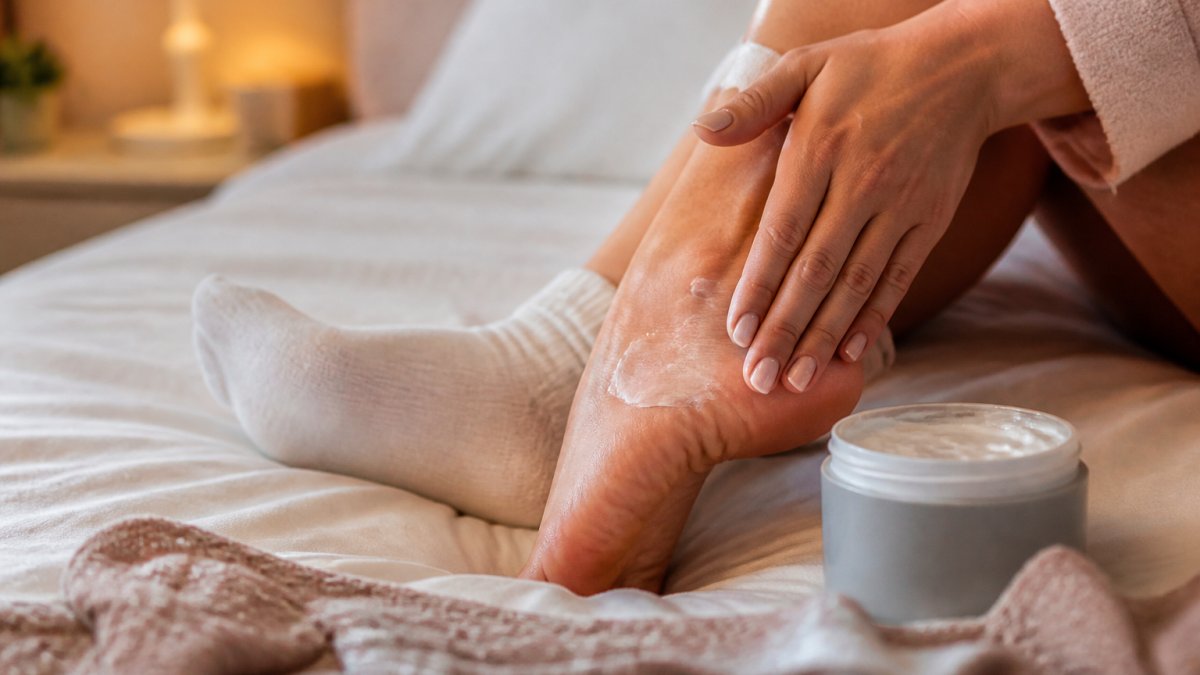
Step 1: Prepare and exfoliate
Start with clean feet: wash with warm water and mild soap, then dry completely, since lingering moisture dilutes your moisturizer.
Next, gently exfoliate with a pumice stone, foot file, or scrub, working in circular motions for 30-60 seconds per heel. Light exfoliation removes the barrier blocking moisturizer; if your heels are severely cracked, skip this for the first few nights and exfoliate lightly once cracks begin to close.
Pat your feet dry again, since dampness interferes with absorption.
Step 2: Apply moisturizer generously
Most people apply too little. Use enough cream to create a visible layer on your heels and surrounding foot area, starting with a quarter-sized amount per foot and more if your heels are very dry or cracked.
Apply in upward strokes from toes to ankles, massaging gently for 1-2 minutes to boost blood flow and absorption. Focus on your heels, the sides of your feet, and any visible cracks or calluses.
SofSpa® Softening Cream Concentrate ($12.00) works well for this step because it's formulated to absorb slowly and penetrate deeply. It's designed specifically for overnight treatments and pairs effectively with moisturizing socks.

Step 3: Put on your socks and settle in
Put on your socks within a minute of applying moisturizer to seal in moisture. Original Pedi-Sox® Classic Black Trim ($8.00) work well: the cotton blend stays breathable while creating the occlusive barrier, and the toe-less design keeps toenails exposed and feet from overheating overnight.
Wear your socks at least 6-8 hours, usually overnight, though you can wear them during a day at home. Longer wear means more absorption time; some people do 10-12 hours on weekends for intensive treatment.
Overnight Heel Treatment: Choosing the Right Socks
Material, fit, and design all affect how well overnight heel treatment works and how comfortable the socks are all night.
Cotton socks for breathability and comfort
Cotton socks are the standard for overnight foot care: they trap moisture while allowing air circulation, preventing overheating.
Fit them snugly around foot and ankle without restricting circulation. The Original Pedi-Sox® line offers multiple cotton-blend options in various thicknesses and styles.
Gel-lined socks for intensive moisture retention
Gel-lined socks need careful cleaning: hand wash in cool water and air dry, since machine washing degrades the gel lining over time.
Silicone lining for targeted heel coverage
They're durable and easier to clean than gel-lined options, usually machine washable on a gentle cycle, and the silicone outlasts gel.
Gel Socks for Dry Feet: How They Compare
For most people, alternating works best: gel socks 2-3 nights per week for intensive treatment, cotton on other nights for comfort and breathability. This beats cotton alone without nightly gel discomfort.
Best Moisturizer for Cracked Heels and Overnight Use
You need a cream that absorbs slowly, penetrates deeply, and hydrates lastingly without leaving feet greasy by morning.
What to look for in a heel cream
The best overnight heel creams are rich and emollient-based rather than water-based, since water-based creams evaporate as fast as they absorb. Emollient creams create a protective barrier that holds moisture for hours.
Look for creams labeled intensive or overnight: they're designed to work under occlusion, with a thicker consistency and higher active concentrations.
SofSpa® - Softening Cream Concentrate →
SofSpa® Softening Cream Concentrate ($12.00) is an emollient, botanical-rich concentrate designed to absorb slowly and penetrate deeply, ideal for overnight treatments with Original Pedi-Sox® and other moisturizing socks.
Ingredient considerations for sensitive skin
If your feet are sensitive, check the ingredient list and avoid heavy fragrance or alcohol if you've reacted before.
Choose creams with soothing ingredients like shea butter, cocoa butter, or plant-based oils, and patch-test new creams on a small area first if your skin is very sensitive.
How Long to Wear Moisturizing Socks and What to Expect
Timelines depend on severity and consistency, so realistic expectations keep you committed.
Realistic timeline for softening rough skin
For mild dryness or light calluses, you'll notice improvement within 3-5 nights of consistent treatment. Your heels will feel noticeably softer, and any flaking skin will begin to smooth out.
For moderate cracks or rough patches, expect 1-2 weeks of nightly treatment before significant visible improvement. The cracks will begin to close, and the surrounding skin will soften and regain flexibility.
For severe cracked heels with deep fissures, plan on 2-4 weeks of consistent treatment. Severe cracks take longer to heal because they extend deeper into the skin layers. You may see improvement after the first week, but full closure of deep cracks requires patience and consistency.
These timelines assume you're wearing the socks for 6-8 hours per night, using an appropriate moisturizer, and maintaining the routine regularly. Sporadic treatment will extend these timelines significantly.
Frequency and duration for best results
Wear moisturizing socks every night for the first 2 weeks to establish results. After that, most people can maintain their improvements with 3-4 nights per week of treatment. Some people prefer to continue nightly treatment during winter months when skin tends to be drier, then reduce frequency in summer.
Once your heels are healed, you can shift to maintenance mode, treating your feet 1-2 nights per week to prevent cracks from returning. This is far easier than treating severe cracks, so consistency during the maintenance phase pays off.
Duration per treatment should be 6-8 hours minimum. Overnight is ideal because you're not moving around, which means the socks stay in place and the moisturizer isn't disturbed. If you wear socks during the day, make sure you're stationary or moving minimally, wearing moisturizing socks while walking around will cause friction that reduces effectiveness.
When Cracked Heels Need Medical Attention
Most cracked heels respond well to home treatment with moisturizing socks and cream. However, some situations require professional medical evaluation.
Care and Durability: Making Your Socks Last
Moisturizing socks are an investment, and proper care extends their life and maintains their effectiveness.
Cotton socks should be hand washed or machine washed on a gentle cycle in cool water. Avoid hot water, which can damage elastic and shrink the fabric. Use mild detergent.
Air dry your socks whenever possible. The dryer's heat degrades elastic and can shrink socks, particularly around the heel and arch areas. Hang them or lay them flat to dry.
Rotate between multiple pairs of socks if you're treating your feet nightly. This extends the life of each pair and ensures you always have clean socks available. Most people find that owning 3-4 pairs of moisturizing socks makes it easy to maintain a consistent routine.
With proper care, cotton socks typically last 50-100 washes.
Cracked heels are uncomfortable and frustrating, but they're also preventable and treatable with the right approach. The combination of moisturizing socks, quality cream, and consistent overnight treatment works because it addresses the root cause, moisture loss through your skin's outer barrier.
At Original Pedi-Sox®, we designed our toe-less socks specifically for this purpose. Our Classic Black Trim ($8.00) provides the breathability and fit you need for comfortable overnight wear, while pairing perfectly with intensive moisturizers like SofSpa® Softening Cream Concentrate ($12.00). We invented the pedicure sock, and our professional-grade quality ensures your treatment routine delivers real results night after night.

Start tonight with a complete overnight routine. Your heels will thank you within days.
Frequently Asked Questions
How do socks for cracked heels overnight actually work?
Moisturizing socks create an occlusive barrier that locks moisture and cream against your skin, preventing evaporation overnight. This extended contact allows the moisturizer to penetrate deeply into rough, dry skin. The enclosed environment also softens hardened skin and heel fissures, making them more responsive to treatment. Cotton socks trap moisture effectively.
Should you apply moisturizer before putting on moisturizing socks?
Yes. Apply your chosen moisturizer or heel cream generously to clean feet, focusing on heels and rough patches, then put on your socks immediately. This traps the cream against your skin and maximizes absorption overnight. For best results, use a rich, emollient cream like SofSpa® Softening Cream Concentrate ($12.00), which is specifically designed for overnight treatments and works excellently with moisturizing socks.
How often should you wear moisturizing socks for cracked heels?
For severe cracking or dry feet, wear moisturizing socks 3-5 nights per week initially. Most people see noticeable softening of rough skin within 2-3 weeks of consistent use. Once your heels improve, reduce frequency to 1-2 nights weekly for maintenance. Listen to your skin; if irritation develops, take a break or switch to a gentler moisturizer. Consistency matters more than nightly use.
Are gel heel socks better than regular cotton socks for dry feet?
Cotton socks are breathable, comfortable for regular wear, and work best when paired with a rich moisturizer. Your choice depends on skin severity and personal preference.
- Editorial Team


Comments 0